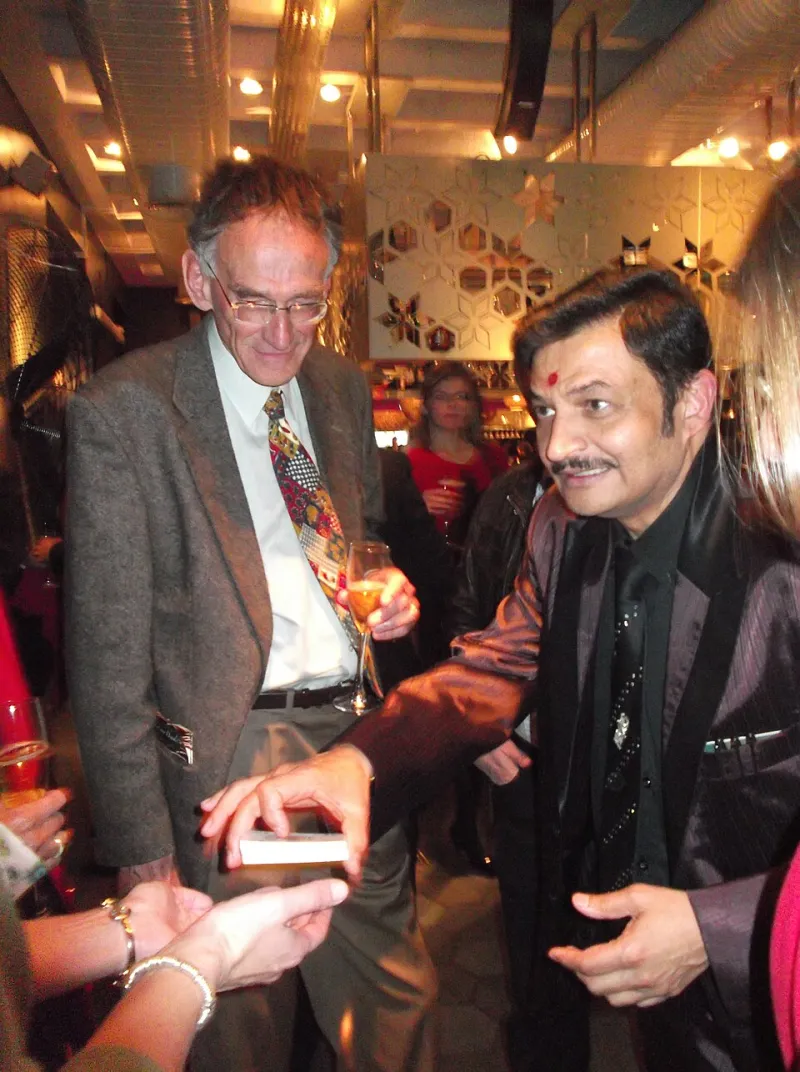
Fifteen Years of Being Paid in Cash, Crumbs and Occasional Applause

Photo: Slyronit, CC BY-SA 4.0, via Wikimedia Commons
There's a photograph somewhere of me, aged twenty-four, standing in the rain outside a Boots in Doncaster with a guitar case full of £14.37 in loose change and a face like a slapped trifle. It remains one of the better-paid gigs of my early career.
Fifteen years on, I've been booked — or at least acquired — by virtually every tier of the British entertainment pyramid. And I'm here to tell you the pyramid is less a pyramid and more a Jenga tower built by someone who'd had a few.
Tier One: The Pavement
Busking is the only job I know where you can be simultaneously self-employed, unpaid, and heckled by a seagull. The economics are simple: you perform, strangers decide your wage in real time, and the local council decides whether you're legally allowed to exist.
I've made £90 on a Saturday in York and £2.50 (a 50p piece and a button, genuinely a button) on a Tuesday in Leeds. The button lives in my wallet as a reminder that the market is not always rational.
The etiquette, such as it is: never pitch within earshot of another busker, never play Wonderwall unless you want to be legally reclassified as a nuisance, and always, always check the weather. A soggy set list is the least of it — a soggy magician is a genuine health hazard.
Tier Two: The Pub Open Mic
Ah, the open mic. The only venue where the sound engineer is also the landlord, the drummer is also the landlord's nephew, and the payment is a pint and a sausage roll that has been sitting under a heat lamp since the previous millennium.
But I owe open mics everything. It's where you learn the sacred art of holding a room that doesn't want to be held — where half the audience are waiting their turn and the other half are watching the football on mute. If you can win over a Tuesday night crowd in a Wetherspoons, a wedding is a spa day.
Tier Three: The Wedding-Industrial Complex
Somewhere around tier three, money starts appearing. Actual money. Invoices. A person called a 'coordinator' who is not related to the venue owner.
The wedding circuit is a peculiar economy. You're paid handsomely, fed adequately (always ask about the vendor meal — this is not negotiable), and treated with a strange mixture of reverence and suspicion, like a cat that's been hired to do accounts.
The unwritten rules: never outshine the bride, never drink more than the best man, and never, under any circumstances, do the trick with the ring if the ring is load-bearing.
Tier Four: The Corporate Gala
Corporate work is where performers go to be paid extremely well to be ignored politely. I once did forty minutes of close-up magic at a black-tie do in Mayfair where a man in a £3,000 suit looked at me mid-trick and said, 'Sorry, are we meant to be watching?'
We were not, apparently. I was set dressing with sleight of hand. And yet the invoice was honoured within fourteen days, which in entertainment terms is basically same-day banking.
Tier Five: The Festival Main Stage
And then the top of the tower: festivals. Glorious chaos. Proper stages, proper crowds, proper fees — minus the 40% that agents, insurance, and a man called Gaz take off the top.
The treatment varies wildly. Some festivals treat artists like royalty with rider requests. Others provide a 'green room' that is a tent, and the tent is next to the generators, and the generators are winning.
What Fifteen Years Actually Teaches You
That respect doesn't correlate with fee. The kindest crowd I ever played was sixty pensioners in a village hall in the Peak District who gave me a standing ovation, a thermos of tea, and a lift to the station.
The worst was a six-figure corporate bash where nobody made eye contact.
So book the unexpected. Book the village hall. Pay your performers, feed them, and tell them where the kettle is. We'll do the rest.